


Grease-Lubricated Track Chains for Excavators and Crawler Undercarriages
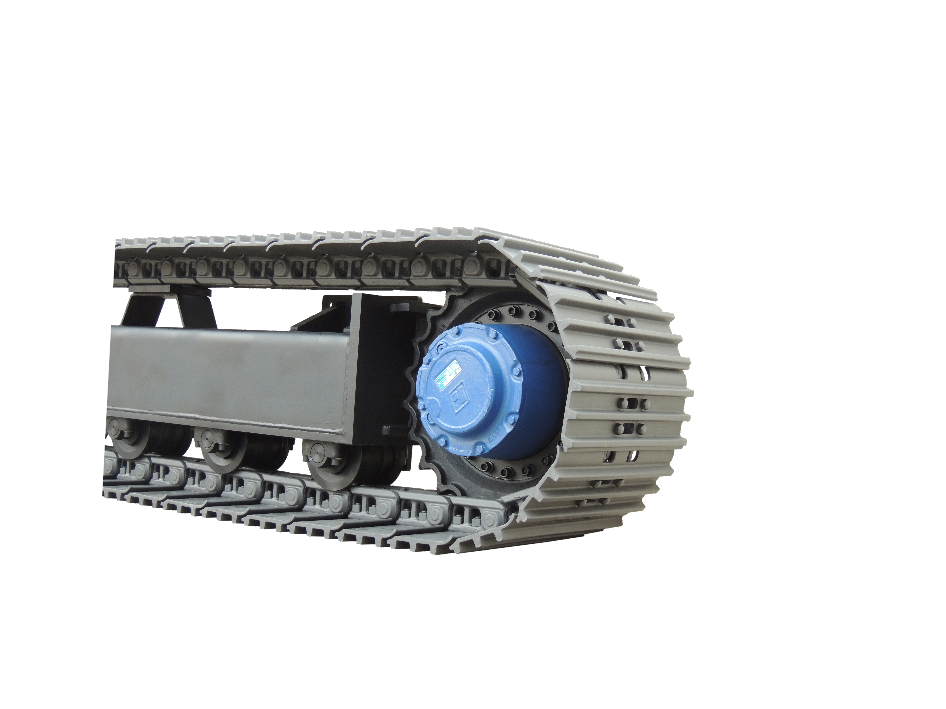
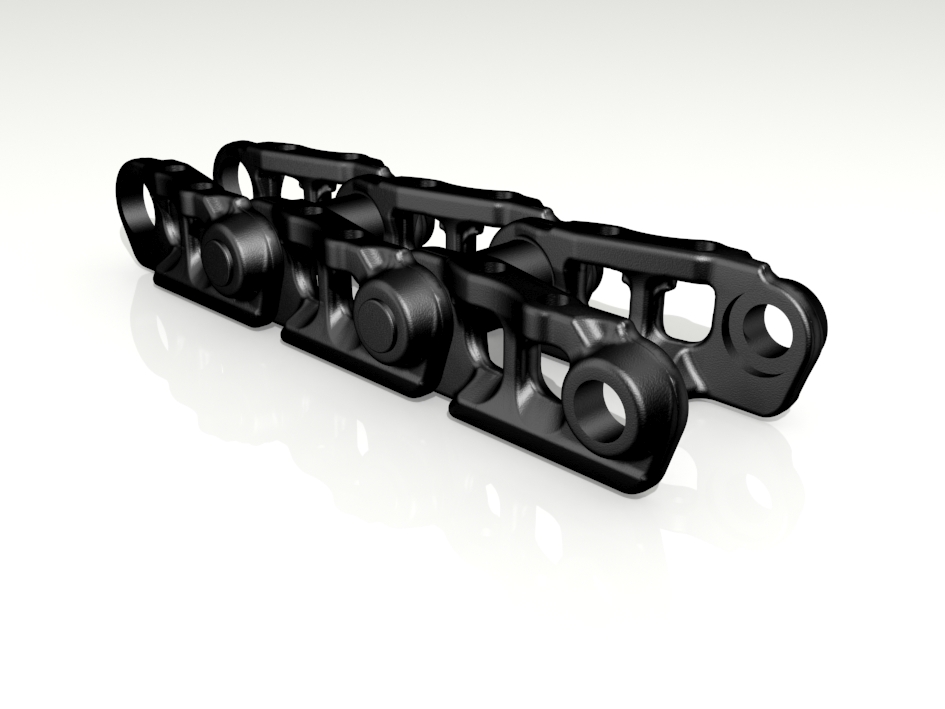
Grease-lubricated track chains are undercarriage chains for hydraulic excavators, crawler excavators and other crawler machines. They are also referred to as excavator chains, undercarriage chains, steel track chains or Track Chains and form the moving chain assembly of the crawler undercarriage.
- Application: hydraulic excavators, crawler excavators and crawler machines
- Design: grease-lubricated and sealed pin-and-bushing system
- Selection: verify chain pitch, link count, master link design and undercarriage configuration
📞 +49 (0)2241 26 56 700
Search for machines (e.g. Komatsu PC200 LC-7)
What Is a Grease-Lubricated Track Chain?
A grease-lubricated track chain consists of track links, pins, bushings and seals. The lubrication is located within the joint area between pin and bushing and supports movement of the chain assembly under load.
The sealing system reduces the ingress of dirt, moisture and abrasive material into the joint area. This supports the function of the pin-and-bushing system when chain design, undercarriage condition and operating environment are technically aligned.
Excavator Chains, Track Chains and Track Links
In international undercarriage terminology, complete chain assemblies are commonly referred to as Track Chains or Track Chain Assemblies. In practical purchasing and workshop language, they may also be called excavator chains, undercarriage chains or steel track chains.
Individual chain links are referred to as Track Links. These terms are especially relevant for technical drawings, international part references and manufacturer catalogues.
Pins, Bushings and Seals
Pins and bushings form the joint points of the track chain. During operation, tensile loads, impact forces, articulation movement and contamination act on these components.
Seals retain the lubricant within the joint area and reduce the ingress of foreign material. Damaged seals, worn bushings or increased joint play can lead to chain elongation, irregular chain movement and increased undercarriage wear.
Chain Pitch, Link Count and Master Link Design
For correct identification of a grease-lubricated track chain, chain pitch, link count and master link design are decisive. The chain pitch must match the sprocket, idler and undercarriage geometry.
The link count determines the overall chain length. Even within the same machine series, different undercarriage versions, link counts or master link systems may be used. Selection by manufacturer and model name alone is therefore not technically sufficient.
Hammer-Lock Pins, Press-Fit Pins and Master Links
Many grease-lubricated excavator chains are designed with hammer-lock pins, press-fit pins, master links or split end links. These components affect installation, removal and repair of the chain assembly.
The specific master link design must match the chain pitch, pin-and-bushing system and existing undercarriage configuration. For targeted repairs, repair links and master links are suitable only when they match the existing chain specification.
Heavy-Duty Designs for High Undercarriage Loads
For demanding applications, many grease-lubricated track chains are available in Heavy Duty designs. Depending on the construction, track links, pins or bushings may be designed for higher operating loads.
Whether a standard or Heavy Duty version is appropriate depends on machine class, application profile, ground conditions and the condition of the complete undercarriage.
Typical Applications
Grease-lubricated track chains are primarily used on hydraulic excavators, crawler excavators and other crawler machines. Typical applications include earthmoving, civil engineering, demolition, material handling, recycling and general construction work.
The correct chain design always depends on the machine, undercarriage configuration and technical specification. Certain specialised machines may require different chain configurations.
Typical Wear Patterns
Grease-lubricated track chains should be inspected when chain elongation, increased joint play, damaged seals, irregular chain movement or visible wear on pins and bushings occurs.
Worn sprockets, idlers, track rollers or carrier rollers can also increase load on the track chain. During undercarriage repair, the complete undercarriage system should therefore be evaluated.
Grease-Lubricated Track Chains within the Undercarriage System
A grease-lubricated track chain operates as part of a complete crawler undercarriage. The sprocket engages with the chain, the idler redirects the chain assembly, the track adjuster maintains the required chain tension, track rollers carry the machine and carrier rollers support the upper chain run.
Track shoes are mounted to the track chain and transfer the machine load to the ground. If the track chain and track shoes are supplied pre-assembled, the component is classified as a complete track group. Related chain designs include oil-lubricated track chains and sealed dry track chains.
Grease-Lubricated Track Chains from LIS®
The LIS® range includes grease-lubricated track chains, excavator chains, undercarriage chains and Track Chains for numerous hydraulic excavators, crawler excavators and crawler machines. Selection is based on technical undercarriage data and the specific machine configuration.
📞 +49 (0)2241 26 56 700