


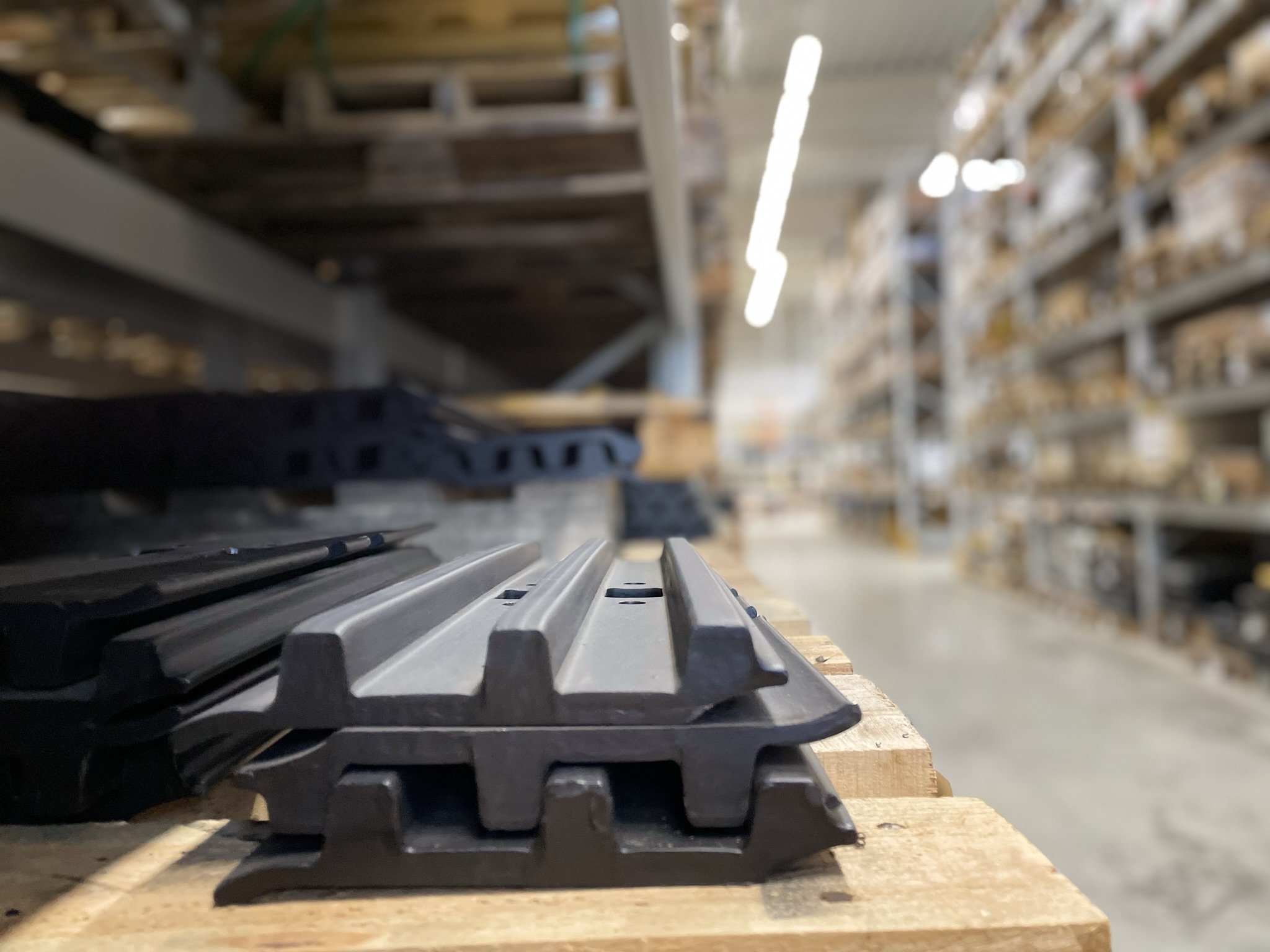
Track Shoes for Excavators, Dozers and Crawler Undercarriages
Track shoes, also referred to as crawler track shoes or grouser shoes, form the ground-contact surface of crawler undercarriages. Selection is based on grouser profile, shoe width, track pitch, mounting dimensions and machine application.
- Single Grouser, Double Grouser, Triple Grouser and End Track Shoes
- For excavators, dozers, crawler loaders, pavers and other tracked machines
- Technical drawings available after account registration
📞 +49 (0)2241 26 56 700
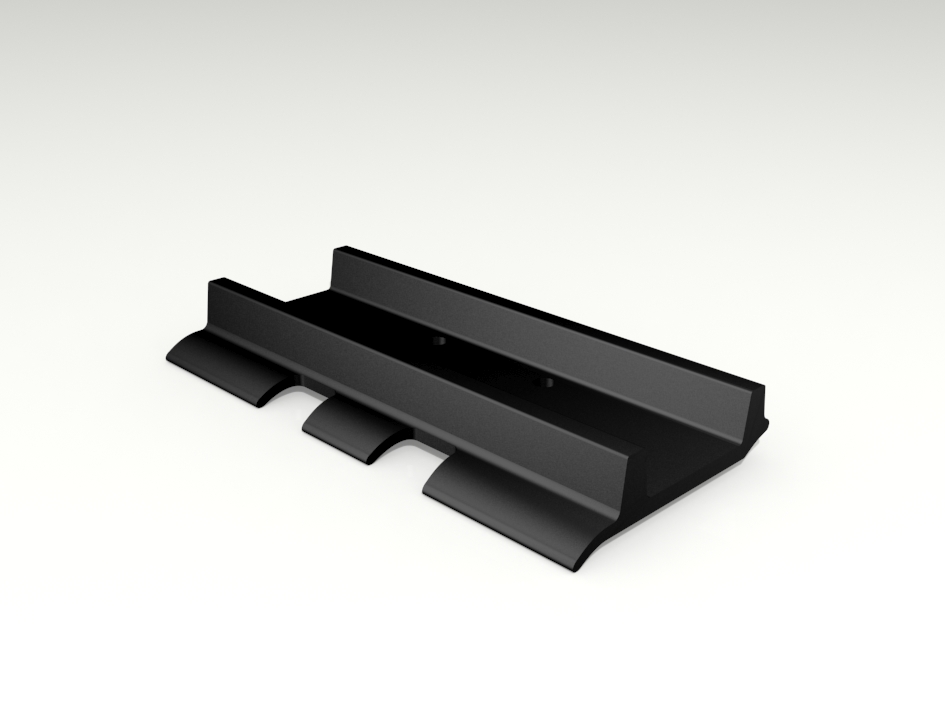
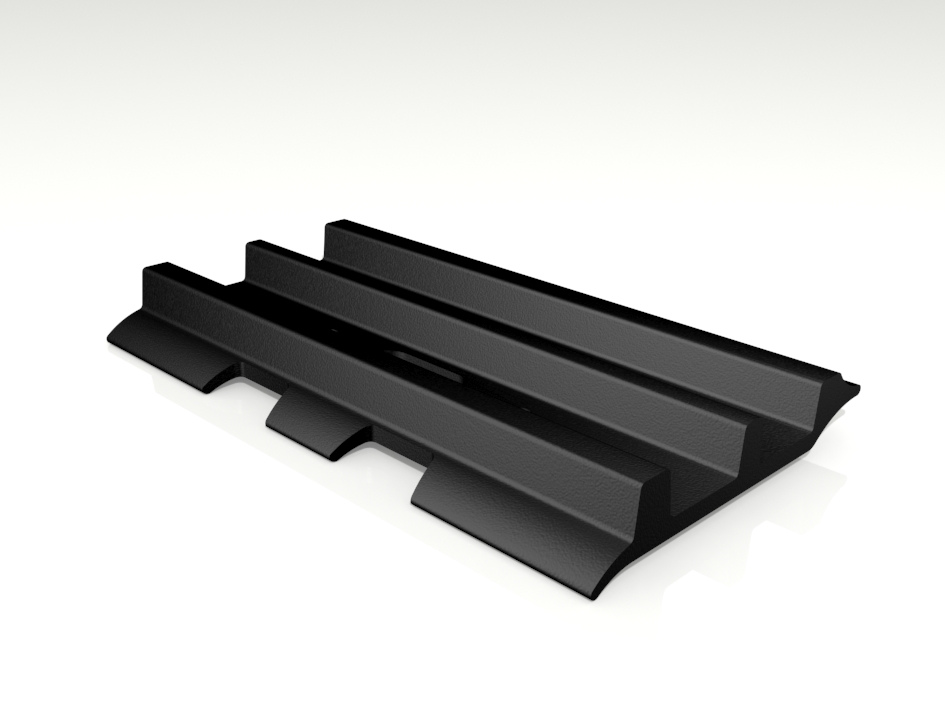
What Are Track Shoes?
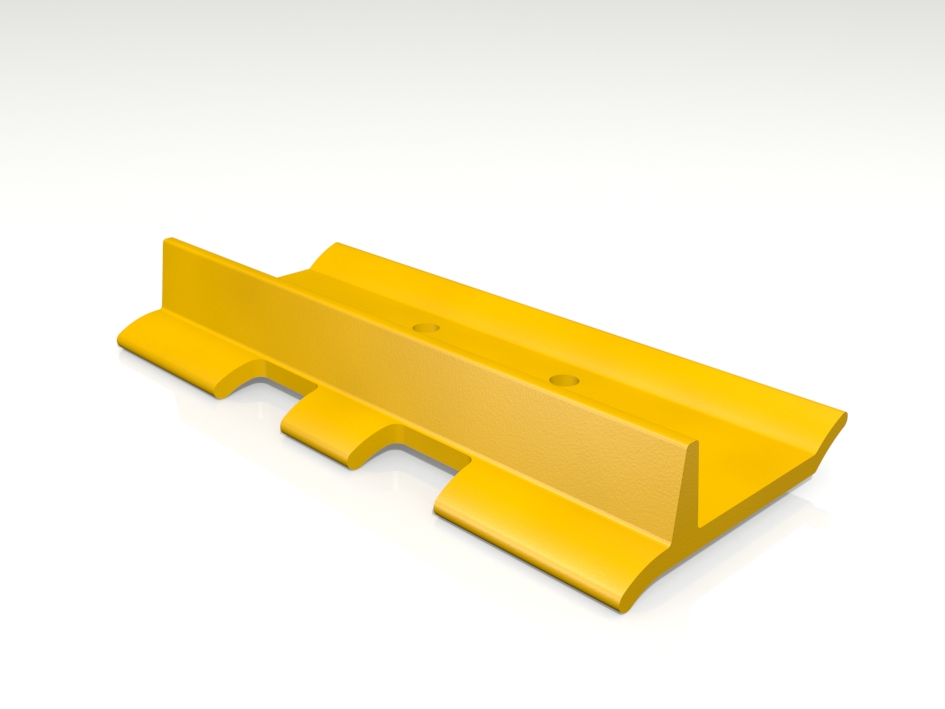
Track shoes are bolted steel plates mounted onto the track chain of a crawler undercarriage. They create the contact surface between the machine and the ground and directly influence traction, ground pressure, stability, manoeuvrability and undercarriage wear.
Different machine types and applications require different track shoe configurations. The most important selection criteria are grouser profile, width, track pitch, shoe thickness, mounting dimensions and compatibility with the existing track chain.
Difference Between Single Grouser, Double Grouser and Triple Grouser Track Shoes
The number of grousers significantly affects penetration, traction and machine manoeuvrability.
Single Grouser Track Shoes
Single Grouser track shoes are commonly used on bulldozers and crawler tractors. The high central grouser penetrates deeply into the ground and provides maximum traction and pushing performance.
Double Grouser Track Shoes
Double Grouser track shoes are frequently used on crawler loaders and heavy-duty machines. They offer a balanced combination of traction, stability and manoeuvrability in demanding operating conditions.
Triple Grouser Track Shoes
Triple Grouser track shoes are primarily used on excavators. Compared with Single Grouser designs, they provide lower ground penetration but improved turning characteristics, reduced steering resistance and smoother machine operation across a wide range of ground conditions.
Width, Track Pitch and Mounting Dimensions
Selecting the correct track shoe requires more than matching the width. Track pitch, bolt pattern, mounting dimensions, shoe thickness and track chain compatibility must also be verified.
Wider track shoes reduce ground pressure and improve flotation on soft ground. However, excessively wide shoes can increase loads on track chains, pins, bushings and other undercarriage components. The correct width should always be selected according to machine type, operating conditions and undercarriage design.
Why Are There Multiple Track Shoes with the Same Width?
Several track shoes may share the same width while still being technically different. Differences can include track pitch, grouser profile, shoe thickness, bolt pattern, mounting dimensions, end-shoe configuration or specialised designs.
Technical drawings, mounting dimensions and existing undercarriage specifications should always be checked before ordering replacement track shoes.
End Track Shoes and Special Designs
End Track Shoes are installed at specific positions within the track assembly and differ structurally from standard track shoes. They must match the track chain configuration and mounting arrangement of the machine.
Additional specialised designs include asymmetrical, offset, angled and pre-drilled track shoes. These configurations may be required for widened track frames, specialised machine geometries, pavers, milling machines or the installation of Bolt-on Rubber Pads.
Track Shoes with Additional Holes for Rubber Pads
Some track shoes are manufactured with additional mounting holes for Bolt-on Rubber Pads or specialised paver rubber pad systems. In these applications, bolt patterns, mounting dimensions and rubber pad specifications must match the track shoe precisely.
A complete overview of compatible systems can be found in the Rubber Pads category.
When Should Track Shoes Be Replaced?
Track shoes should be inspected when grouser height is heavily worn, bolt heads approach grouser height, mounting holes become elongated or shoes are bent, cracked or loose. Worn track shoes can reduce traction and contribute to premature wear of track chains, bolts and other undercarriage components.
Track Shoes, Track Chains and Rubber Tracks
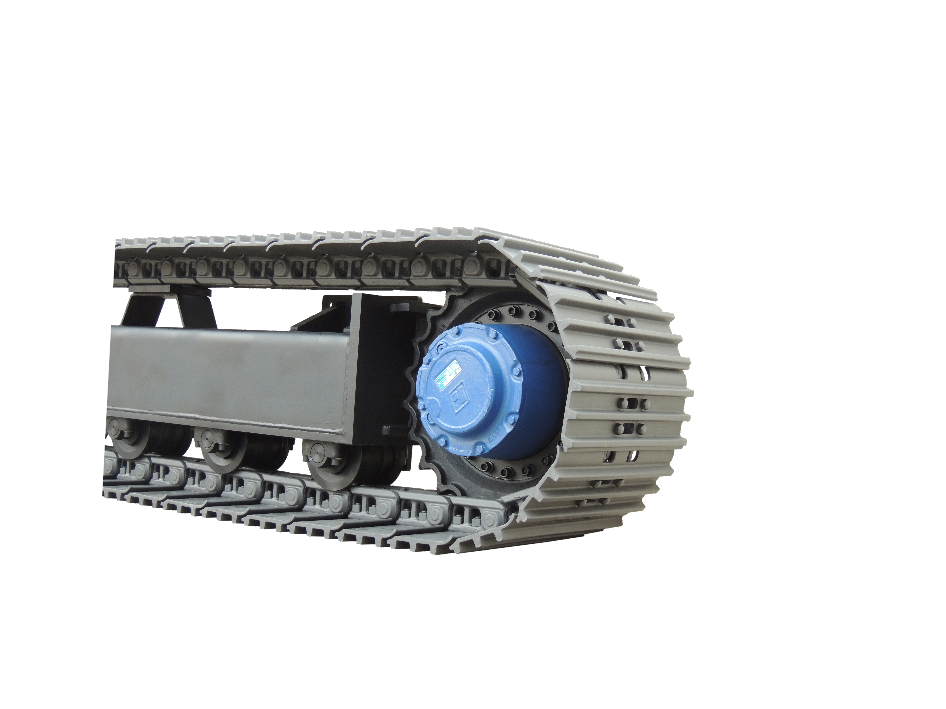
Track shoes are bolted onto track chains and together form a complete steel track assembly. Complete Track Groups consist of track chains supplied with mounted track shoes.
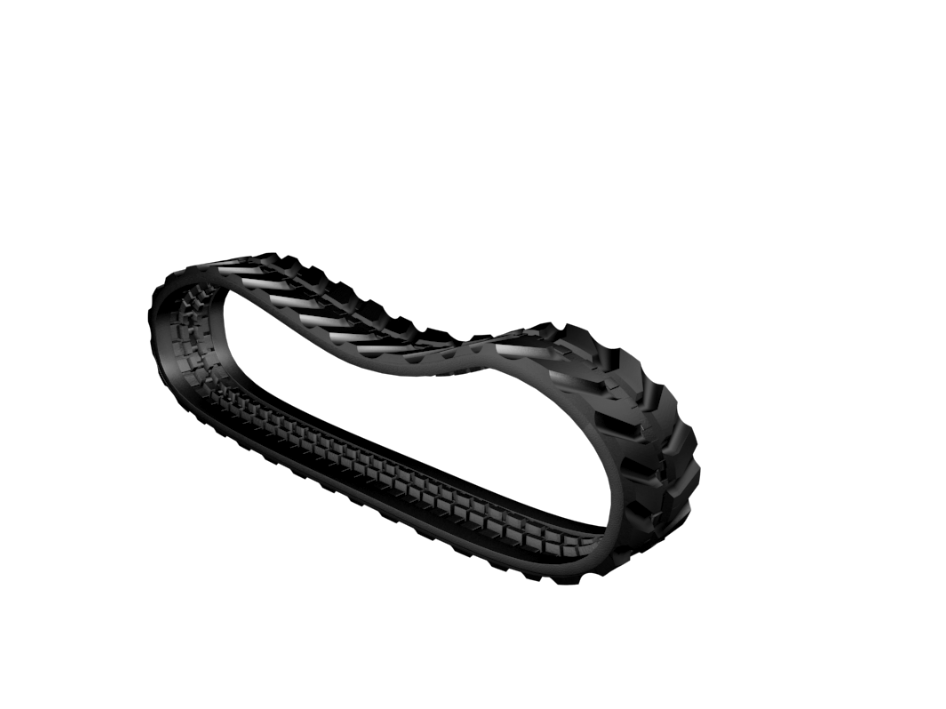
Rubber Tracks are complete rubber undercarriage systems and do not utilise steel track shoes.
Compatible Components for Track Shoes
Track shoes operate as part of a complete undercarriage system that includes track chains, bolts, nuts and optional rubber pads. Related product categories include Track Chains, Complete Track Groups, Bolts and Nuts, Rubber Pads and the main Undercarriage category.
📞 +49 (0)2241 26 56 700