


Cutting Edge Steel and Weld-On Cutting Edges for Excavator and Loader Buckets
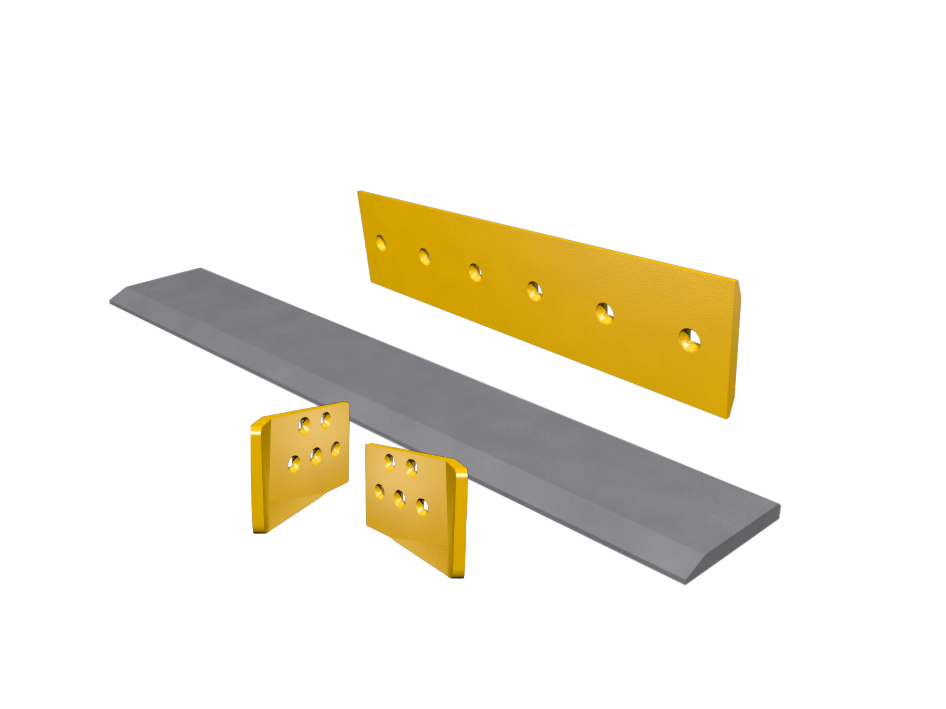
Cutting edge steel and weld-on cutting edges are used to build or repair welded working edges on excavator buckets, wheel loader buckets and compatible attachments. Depending on the product, the profiles differ in cross-section, length, bevel design and nominal hardness grade.
- Design: weld-on cutting edge profiles with a single or double bevel depending on the product
- Hardness grade: stated in the technical data of the individual product
- Selection: width, thickness, length, bevel position, installation direction and existing component design
📞 +49 (0)2241 26 56 700
Cutting edge steel for new and repaired bucket edges
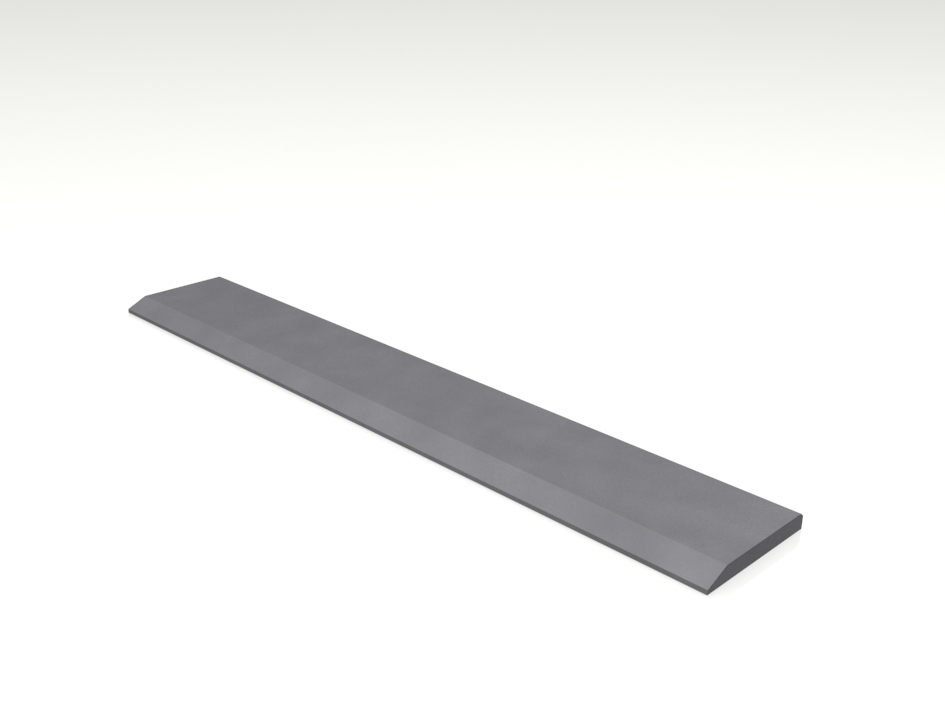
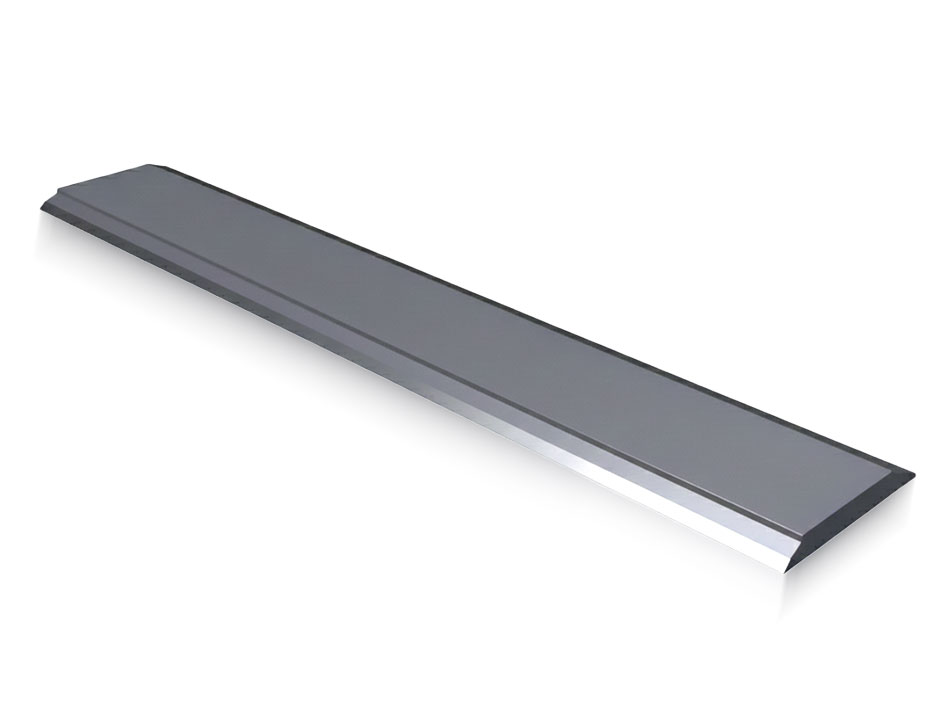
Cutting edge steel is used when a welded cutting edge needs to be newly fabricated or repaired. The beveled profile forms the working edge or is welded into an existing cutting edge assembly. Typical applications include excavator buckets and wheel loader buckets.
Cutting edge steel, bucket cutting edges and weld-on cutting edges
In workshop and replacement-parts terminology, cutting edge steel, bucket cutting edge and weld-on cutting edge are often used alongside one another. In this category, cutting edge steel refers to the beveled steel profile. When the profile forms the lower working edge of a bucket, it serves as the bucket cutting edge. Weld-on cutting edge identifies a cutting edge designed for welded installation and distinguishes it from bolt-on cutting edges.
Check the cross-section, length and bevel design
Width and thickness determine the cross-section of the cutting edge profile. The required length depends on the working width, repair area and cutting edge construction. The bevel design and bevel position must match the existing component and the intended installation direction. Matching external dimensions are not sufficient when the bevel or connection geometry differs.
For repair work, the installed cutting edge, base structure and adjacent components should be measured together. Selection based solely on the machine type or bucket width is not reliable. Available cross-sections, bevel designs and standard lengths are stated in the technical data of the individual products.
Single-bevel and double-bevel profiles
A single-bevel cutting edge profile has a bevel on one side of the profile. The bevel position and installation direction must match the existing cutting edge. Double-bevel profiles use a different cross-section and cutting edge geometry. Profiles with the same width and thickness are therefore not automatically interchangeable.
Select the hardness grade for the component design
Hardness grade is an important selection criterion, but it is not the only measure of product suitability. Depending on the product, the current LIS® range includes cutting edge profiles in the nominal hardness grades HB250, HB400 or HB500. The correct design also depends on profile thickness, base material, abrasive wear, impact loading and the intended welding process.
A higher nominal hardness is not automatically the correct choice for every bucket. Only the material and hardness specifications stated for the individual product are binding. Values from a profile with similar dimensions must not be transferred to another product.
Standard lengths and custom-cut profiles
This category contains cutting edge steel and weld-on cutting edges in defined standard lengths. The required length must be determined from the installed component or reliable technical documentation.
Custom-length HB500 profiles are available through the separate cut-to-size range under Edges and Blades. The available cross-sections and profile designs are listed separately in that category.
Plan welding for the individual product
Before welding, check the condition and material of the base structure, the connection surface, bevel position and weld preparation. Preheating, filler material, heat input and welding sequence must be matched to the material grade, profile thickness, base material and joint design. General welding values or specifications from another hardness grade must not be transferred without technical verification.
Difference from wear strips and bolt-on cutting edges
Cutting edge steel and weld-on cutting edges are used as working or cutting edges. Wear strips and flat steel are primarily used to protect surfaces, bucket undersides and local wear areas.
For replaceable cutting edges with a defined bolt pattern, see 6 Inch Bolt-On Cutting Edges. These products are mechanically fastened and differ fundamentally from the welded profiles in this category.
Additional cutting edges, blades and wear profiles are listed under Edges and Blades.
Lifetime breakage warranty for LIS® cutting edge profiles
Lifetime breakage warranty: The LIS® cutting edge steel profiles and weld-on cutting edges listed in this category are covered by the lifetime breakage warranty. Coverage is limited to material and manufacturing defects and does not include normal wear caused by operating conditions. Further information is available in the LIS® warranty conditions.
📞 +49 (0)2241 26 56 700