


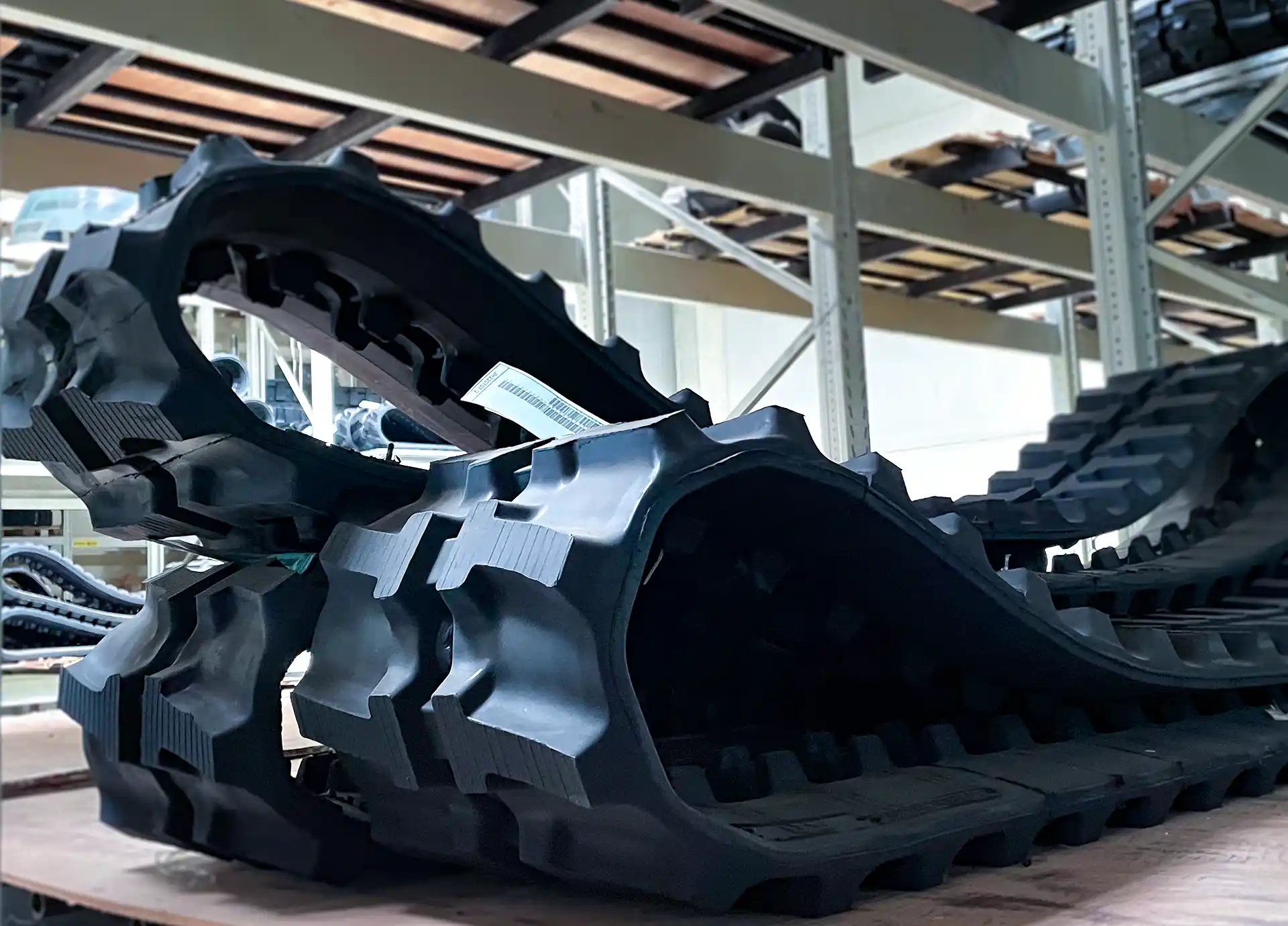
320 mm Rubber Tracks for Mini Excavators, Compact Track Loaders and Tracked Dumpers
320 mm rubber tracks for mini excavators, compact track loaders and tracked dumpers are selected at LIS® by size group, version and machine assignment. This width includes several relevant groups, mainly the 100 mm SRT group, the 86 mm N/W group, the 106Y group, the 90Y group and the 54SRT group; these must be matched with the existing track marking, guide geometry and undercarriage variant.
- Selection via LIS® rubber track finder, product filters or existing track marking
- Check by pitch, number of links, SRT, N, W or Y version
- For mini excavators, compact track loaders, tracked dumpers and compact tracked machines
📞 +49 (0)2241 26 56 700
Search for machines (e.g. Kubota KX71 -3)
Search by dimensions (e.g. 400/74/72.5W)
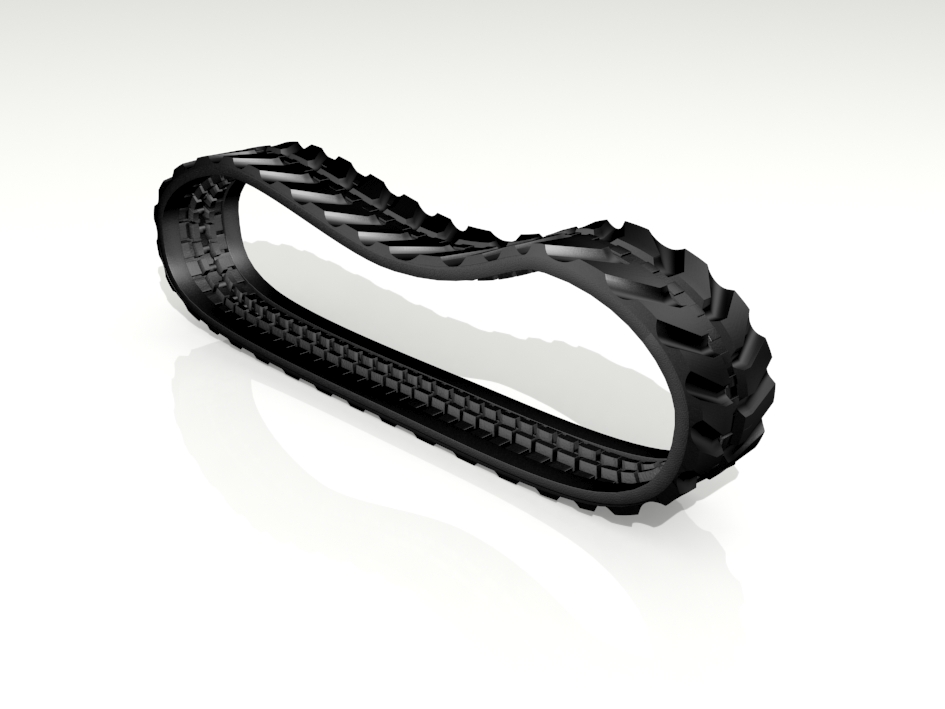
Select 320 mm rubber tracks by size group and version
For 320 mm rubber tracks, the size group determines the technical assignment. The LIS® range includes variants with 100 mm pitch, 86 mm pitch, 106 mm pitch, 90 mm pitch and 54 mm pitch. Depending on the article, SRT, N, W or Y versions are used.
For purchasing departments, workshops and spare parts dealers, comparison with the existing track is essential. Relevant details include the readable track marking, the complete technical product data, the track version, the inner guide geometry and the displayed machine assignment in the LIS® shop.
Match LIS® article data with market-standard size notation
For rubber tracks, size data may be arranged differently depending on the data source. LIS® articles such as 320/46/100SRT are displayed in the shop in the order width, number of links and pitch. In the market, the same technical size combination is often searched as 320x100x46SRT, meaning width, pitch and number of links.
This also applies to other 320 mm groups: 320/52/86W may appear as 320x86x52W, 320/39/106Y as 320x106x39Y and 320/56/90Y as 320x90x56Y. For technical selection, the order of notation is not decisive; the clear combination of width, pitch, number of links and version is decisive.
Check the 100 mm SRT group for compact tracked undercarriages
The 100 mm SRT group is particularly well represented in the 320 mm width. In the LIS® range, it covers low to medium link counts, for example articles such as 320/37/100SRT, 320/46/100SRT or 320/52/100SRT.
This group should not be confused with 86 mm, 90 mm or 106 mm variants. The decisive factors are pitch, number of links, SRT version and the machine assignment displayed in the article.
86 mm N/W group for compact track loaders and compact machines
The 86 mm group is listed in the 320 mm width article by article as an N or W version. Typical LIS® size data includes 320/46/86N, 320/48/86W, 320/52/86W or 320/53/86W.
These variants must be matched particularly carefully with the existing track guidance and undercarriage. For compact track loaders and other compact tracked machines, the machine designation alone is not sufficient if different undercarriage variants or track versions are possible.
Do not mix the 106Y and 90Y groups
The 106Y group must be assessed as a separate size group in the 320 mm width, for example with 320/39/106Y. It differs clearly from the 100 mm SRT group and the 86 mm group and must match the existing Y guide geometry.
The 90Y group includes further Y versions in the LIS® range, for example 320/52/90Y, 320/56/90Y or 320/58/90Y. Here too, pitch, number of links, Y version and machine assignment must be checked together.
Check 54SRT and further special groups
In addition to the main groups, the 320 mm category includes further technical variants, including 54SRT versions such as 320/72/54SRT, 320/80/54SRT or 320/84/54SRT. These articles have a different pitch and link-count structure than the 100 mm SRT group or the 86 mm group.
Individual further size groups, for example with 84 mm or 52.5 mm pitch, should always be checked article by article. The decisive factor remains the match between track marking, pitch, number of links, version and machine assignment.
Check track marking, machine model and undercarriage together
If the marking on the existing rubber track is still readable, the complete designation should be compared with the technical product data. Width, pitch, number of links and track version must all match. For 320 mm rubber tracks, neither the width nor the machine designation alone is sufficient for reliable identification.
If the marking is no longer completely legible, width and pitch must be measured individually, the inner links counted and the track version or inner guide geometry identified. The machine model, series, year of manufacture and undercarriage variant must also be checked.
The values may be displayed in different orders depending on the product designation, data source or marking on the track. The individual values and the complete technical combination are decisive, not the order in which they are written.
Check adjacent undercarriage components if identification is unclear
If identification is unclear, adjacent undercarriage components should also be checked, especially drive sprockets, idlers, track rollers and track adjusters. A 320 mm rubber track must match the existing undercarriage geometry, not only the machine designation.
320 mm rubber tracks, compact track loader tracks and rubber crawler tracks
Depending on market terminology, 320 mm rubber tracks may also be referred to as 320 mm excavator tracks, rubber crawler tracks, compact track loader tracks or tracks for tracked dumpers. This category covers rubber tracks for machines with rubber-track undercarriages, not steel tracks.
If a steel-track undercarriage is required instead of a rubber track, the relevant undercarriage categories are track chains, complete track chains, track shoes or rubber pads and rubber plates, depending on the required component.
Further rubber track widths
LIS® 320 mm rubber tracks are used in OEM quality. If the existing track has a different width, the main category rubber tracks leads to further widths from 150 to 900 mm. Common technical entry points also include 300 mm rubber tracks, 350 mm rubber tracks, 400 mm rubber tracks and 450 mm rubber tracks.
📞 +49 (0)2241 26 56 700